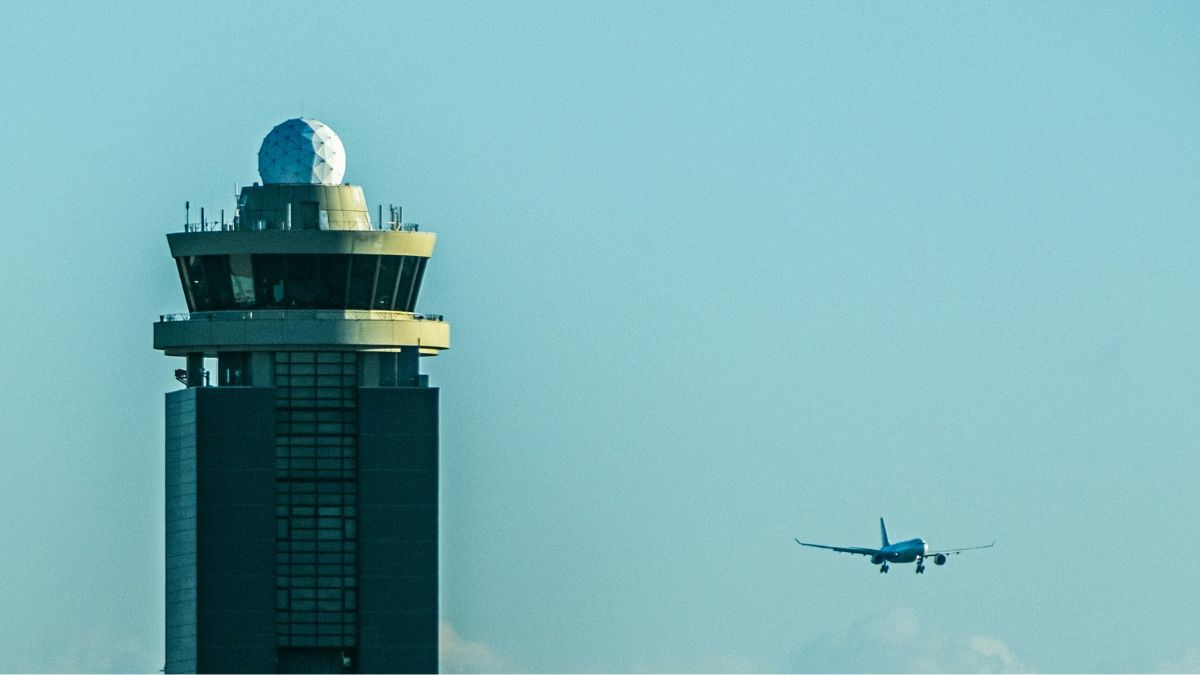
Imagine managing an environment where a single piece of runway debris, a stray bird, or a bottleneck at security can disrupt thousands of lives in minutes. This is the daily reality for airport operations teams around the world.
Airports are among the most complex built environments on earth, combining pedestrians, aircraft, high-speed cargo and transportation vehicles, and critical infrastructure across vast areas that must be monitored around the clock. Traditional surveillance systems were built for a different era. They have blind spots, struggle in poor weather, and lack the real-time spatial awareness needed to stop incidents before they escalate.
That’s where LiDAR steps in. By generating high-resolution, three-dimensional digital representations of airport environments in real time, LiDAR technology is transforming how aviation safety and operations are managed, from the tarmac to the terminal.
Tarmac Safety: Eliminating Blind Spots on the Runway
The airport environment is harsh. Runway incursions, foreign object debris (FOD), and bird strikes are among the most persistent safety challenges in aviation, and among the most difficult to detect using conventional camera or radar systems alone.
Covering an entire runway with conventional sensors has traditionally meant dense, expensive infrastructure. A standard runway runs three to four kilometers long, and short-to-medium-range sensors can’t bridge that distance without multiplying hardware costs. The recently launched InnovizSMART LiDAR addresses this directly, delivering detection capability of up to 450 meters per sensor. That means long runways, taxiways, and wide-area perimeters can be monitored using far fewer units, without sacrificing resolution or accuracy.
Moreover, the sensor maintains maximum accuracy of 3D awareness regardless of lighting conditions or weather, whether it’s a foggy early morning or the glare of a summer afternoon. It is also resilient to most blockage scenarios, such as rain droplets, snowflakes, mud, dust, and animal-related (e.g., insects, bird feces, etc.).
This allows operations teams to identify anomalies, an object on the runway, an unauthorized vehicle crossing a hold line, or an unusual movement pattern, before they escalate into incidents. The result is faster response, fewer close calls, and a meaningful reduction in infrastructure overhead.
Terminal Intelligence: Optimizing Passenger Flow Without Compromising Privacy
Inside the terminal, the challenge shifts from safety to efficiency, though the two are closely linked. Congestion at security checkpoints, gate areas, and baggage claim doesn’t just frustrate passengers; it creates safety risks and operational costs that ripple through the entire airport.
LiDAR is privacy-by-design. The technology captures spatial data only: no facial features, no biometric information. What this means in practice is that airports can upgrade their situational awareness without triggering the regulatory compliance burden that comes with expanding traditional CCTV systems. Under frameworks like GDPR or state-level privacy laws, deploying a camera-based analytics system requires significant legal review. LiDAR sidesteps that by nature.
The InnovizSMART is explicitly designed for compliance-sensitive environments, capturing rich 3D awareness of how people move through a space without ever identifying who they are.
Operations teams can use this data to model crowd behavior, anticipate bottlenecks before they form, and deploy staff more effectively. Over time, the accumulated data also supports longer-term planning decisions around terminal layout, staffing schedules, and gate assignments.
Roadside Awareness: Preventing Near-Miss Collisions
Airport roads and drop-off zones are among the most chaotic traffic environments in any city: high volumes of vehicles, pedestrians moving unpredictably, rideshare pickups, and commercial vehicles all competing for limited space.
The goal isn’t just reactive monitoring. It’s predictive situational awareness, giving airport teams the ability to intervene before a near-miss becomes an incident report.
See InnovizSMART in Action
InnovizSMART is already deployed across defense and other critical infrastructure sites, providing the kind of persistent, all-weather, privacy-compliant awareness that legacy systems cannot deliver.
Whether the priority is runway FOD detection, terminal flow optimization, or curbside conflict prevention, InnovizSMART is built to integrate into existing sensor and video management infrastructure without requiring a full system overhaul. The entry point is a single deployment. The result is a fundamentally more efficient operation.
Explore deployment details, technical specifications, and case studies at Innoviz’s Airports application webpage or Security application webpage. You can also learn more about InnovizSMART capabilities here.